Bellevue Town Car
#1 Town Car Service in Eastside, WA


Our Arlington black car service is built around a simple promise: your day stays on rails. We plan meet points that actually work, add the right I-5 buffers, and keep communication so clear you don’t have to think about it twice.
Arlington sits close to I-5 access, which is exactly why people underestimate it. The corridor moves fast—until it bunches up at the wrong moment. The fix isn’t guessing. It’s using repeatable buffers and meet points that don’t force curb gymnastics.
When the main curb is busy, we don’t fight it—we step aside and win on predictability:
Pick a “quiet edge” meet point: a side-street corner, a lot perimeter, or a pull-off that’s one turn away from the busiest curb lane.
The vehicle stages nose-out (ready to roll), not trapped in a loop.
You walk a short, straightforward path—no weaving through traffic, no driver circling.
This pattern is ideal in Arlington’s I-5 feeder areas (think SR-531 / Smokey Point flow) where a curb can look open for 10 seconds and then lock up instantly.
One-text meetup script for a group-
“Group meetup: by the [tall sign / main canopy / flagpole]. Stand on the [right/left] side facing [north/south]. Our lead is wearing a blue jacket. Please stay together until the car pulls up.”
If the original pickup spot gets blocked, we switch fast—without drama:
Freeze the group: nobody wanders, nobody chases the car.
We move to Plan B (a nearby pull-off that’s easier to stop at and easier to describe).
You’ll get a single “reset” text: new landmark + direction + where to stand.
In heavy rain or cold, we pick a fallback that’s well-lit and minimizes outside time
SR-531 / Smokey Point staging: lot-edge meet points that keep you out of stop-and-go curb lanes.
Downtown “one-block-off” meetups: step off the main curb so the vehicle can stop clean and leave clean.
SR-9 corridor meet points: favor right-in/right-out pull-offs to avoid awkward re-entry turns.
Residential pickups with tight driveways: stage at the nearest safe pull-off rather than forcing a three-point turn at the curb.
Arlington → SeaTac airport transfers (early departures and late arrivals)
Arlington → Paine Field / Everett-area pickups and drop-offs
Client days to Bellevue, Redmond, and Seattle business districts
Evening events and dinners with a “no wandering” return plan
Ferry connections (timed around sailings, not wishful thinking)
Peak windows compress fast on I-5 approaches: a normal drive can turn into a slow funnel with little warning—especially around feeder corridors.
Ferry timing is schedule-based: missing a sailing is a real delay, so buffers must protect the boat time, not just the drive time.
Friction point: Curb access collapses when a pickup pin lands at a busy entrance and vehicles are forced into a slow parking loop.
Fix: We switch to lot-edge staging + a one-text meetup script. A 30–60 second walk beats a 5–10 minute loop every time.
Text us this, and the pickup stays effortless:
Exact pickup address + best entrance note (if there are multiple)
Passenger count + luggage count (and any bulky items)
Hard time (flight time / meeting start / reservation time)
Primary contact + backup contact (especially for groups)
Meetup script (landmark + direction + clothing color)

The night-before check is what makes morning travel feel unfairly easy. Confirm:
Address accuracy (and the correct entrance)
Bags (including anything “easy to forget”)
Your “hard time” target (wheels-up, check-in, meeting start)
We build the buffer once—then you get your brain back. You shouldn’t spend your morning watching maps like a stock ticker. Our job is to make “on time” feel boring.
When the corridor slows, we don’t spiral—we pivot. A simple note helps:
“If the main route stacks up, switch to the alternate corridor and protect the hard time stop.”
Predictable beats perfect. The best meet point is where:
stopping is clean and legal
the car can stage nose-out
you can describe the spot in one sentence
Use the same script every time. Consistency is what keeps groups together—especially when people are tired, late, or juggling luggage.
Groups fall apart when the plan requires five calls. One script keeps everyone aligned:
landmark + direction + clothing color
Choose a fallback meet point for closures or events.
Plan B should be:
within 1–2 minutes of Plan A
well-lit
easy to describe
If access changes, we switch—calmly and fast.

Send one message, one time. Example format:
Stop 1: full address
Stop 2: full address
Stop 3: full address
(Add business names if it helps the pin land correctly.)
Tell us which stop must not slip:
“Stop 2 is hard time: meeting starts at 1:00 PM.”
This is the secret to multi-stop days that don’t drift. Tiny delays stack—recovery time resets the day and keeps you from arriving “just barely” everywhere.
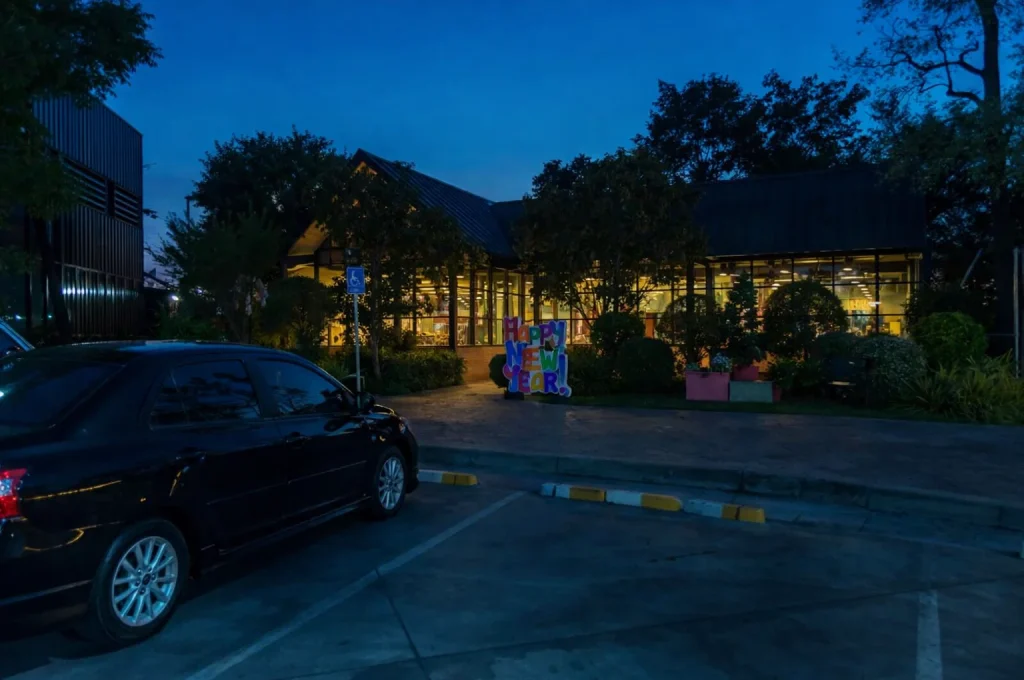
Late-night pickups should be obvious:
bright lighting
clear landmark
minimal crossing or wandering
If it feels sketchy or chaotic, we move the meet point a minute away to something safer and simpler.
We keep it simple:
10 minutes out: get everyone ready
3 minutes out: step to the meet point
No guessing. No missed car.
Backup contact if a phone dies.
For groups, include:
a backup phone number
one point person
clothing color + landmark
That way the pickup still works if someone’s battery quits at the worst time.
For Arlington departures during peak windows, plan a buffer that protects the merge and approach zones, not just the “miles.” If your arrival time is truly fixed (flight/meeting), build in an extra cushion so one slowdown doesn’t become your problem
We rely on three things: a single group lead, a backup contact, and a meetup script (landmark + direction + clothing color). That way one dead phone doesn’t break the pickup.
We choose well-lit meet points, avoid wandering, and send ETAs at 10 and 3 minutes. If the area is restricted or busy, we move the meet point to a calmer pull-off and keep you together.