Bellevue Town Car
#1 Town Car Service in Eastside, WA


Back-to-back meetings, cross-lake calls, airport cutoffs, and “we can’t be late” arrivals. The ride should feel like the calm part of the day: on-time pickups, clean instructions, and enough buffer built in that one slow elevator doesn’t derail the entire schedule. Kirkland is a busy city.
Use a one-block-off meet point when the main curb looks like a funnel.
How it works
Choose a side-street corner one short block away from the front entrance.
Driver stages there (legal stop, less curb competition).
When you’re actually outside, you text “eyes on” and the car rolls in.
Why it’s faster
The main curb gets swallowed by deliveries, rideshares, and quick stops. One block off is quieter, easier to spot, and easier to exit—especially near downtown/waterfront corridors.
“Group of 5. Meet at the large public art feature by the main walkway. We’re 10 steps north of the crosswalk, facing the street. Lead wearing a GREEN hoodie. Text when you’re 3 minutes out.”
(Only change the group size and clothing color—keep everything else tight and visual.)
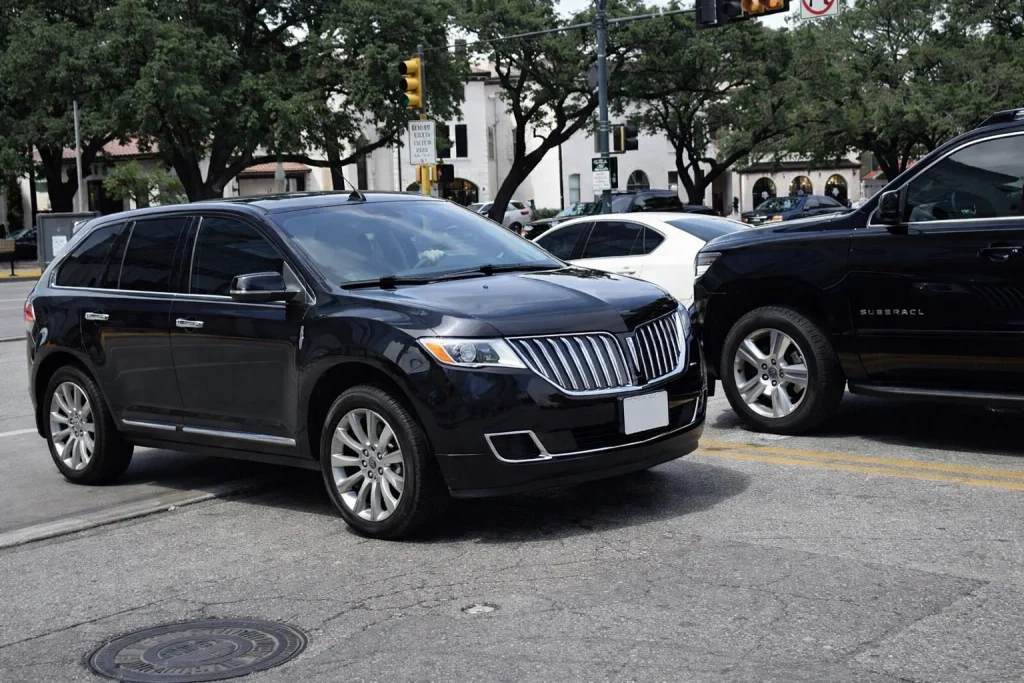
If the curb becomes unusable, don’t “re-plan the whole ride.” Do this instead:
Switch the meet point, not the pickup time.
Move to Plan B: the nearest calm side-street corner with legal stopping.
Send one message: “Curb blocked. Switching to Plan B: side street by the nearest marked loading zone. Same clothing color.”
In heavy rain or winter visibility, pick a meet point with cover + lighting so nobody is wandering around looking for a car.
One-block-off meet points for waterfront/downtown curb crunch
Totem Lake / campus-style pickup logic (security + loading loops)
“Recovery blocks” that match Eastside peak windows, not just distance
Ferry day variability + terminal crowding realism
Winter visibility notes for late-night and hillside neighborhoods
Downtown / waterfront edge: one-block-off side street, staged and ready to roll.
Totem Lake business district: meet at a predictable drive lane point; avoid the “front curb carousel.”
Juanita-area residential: meet at a well-lit corner on a through street (no cramped parking rows).
Kingsgate / north-side neighborhoods: stage near a wide entrance road for easy spotting and quick exit.
SeaTac airport transfers (departures + arrivals)
Cross-lake business runs into Seattle (meetings, hotels, dinners)
Eastside corporate loops (multiple offices, short hops, tight timing)
Event nights (arenas, stadiums, theaters—late pickups, controlled curbs)
Ferry-terminal trips (day plans and weekend travel windows)
Peak windows beat mileage. A “short” trip can take longer than a longer one if you hit the wrong window. Your buffer should be based on when you’re moving, not only how far.
Terminal variability is real. Airport arrivals, baggage timing, and ferry loading patterns can shift. Your plan needs a flexible meet point and a clean recovery move—not a fragile schedule.
Friction point: the main curb becomes unusable—rideshare clusters, delivery stops, or event control forces cars to keep moving.
Fix: Stage nearby + roll-in on text.
Driver waits off-curb; you text “ready + entrance side”; the car pulls in for a quick load and exits immediately.
Send this in one message so everything runs clean:
Pickup address + which entrance/side (north/south/east/west)
Passenger count + bags (and car seats if needed)
Your hard deadline (“arrive by 2:10”)
The single sender contact number (one person coordinating)
The fastest days start with one clean confirmation:
Which door/entrance matters
Who the lead passenger is
Which side of the building is the meet
If those three are right, the day stops bleeding minutes.
A realistic meeting day plan includes “small truth” time:
elevator time
lobby time
parking-lot exit time
a slow crosswalk cycle
So we build buffers that protect the schedule when the city doesn’t cooperate.
Teams lose time when five people send five versions of “where we are.”
Pick one coordinator. One thread. One set of instructions. It’s the simplest way to keep a group pickup fast.

For campus-style locations and office complexes, the best meet point is the one that doesn’t trigger a policy problem. We aim for:
clear public access
legal curb behavior
minimal back-and-forth
Good instructions are simple and visual:
“South side, under the overhang, by the crosswalk.”
“Corner entrance nearest the traffic light.”
Short beats clever. Specific beats long.
Loading loops work only when the role is clear:
Either the driver texts “in the loop now,” or
The rider texts “stepping into the loop now.”
Pick one method for the day and keep it consistent.
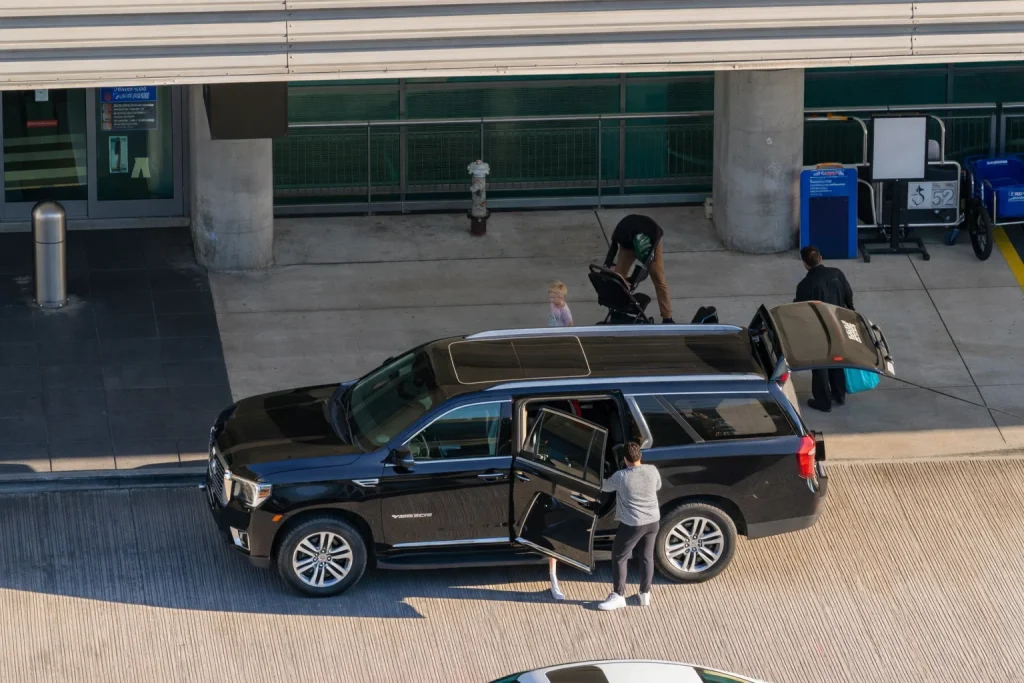
The mistake people make is treating SeaTac like a simple mileage calculation. In reality, timing is shaped by:
commuter peaks
terminal activity
day-of-week patterns
So we plan the pickup window to protect your check-in and security time, not just your drive time.
Flight tracking helps, but the meeting script is what removes confusion. For arrivals, you’ll move faster when you send:
“Checked bag / no checked bag”
“I’m coming out as lead”
the simple landmark + clothing color script
When the timeline changes, we don’t panic and re-plan everything. We adjust the meet point to the cleanest legal option and keep the ride intact.
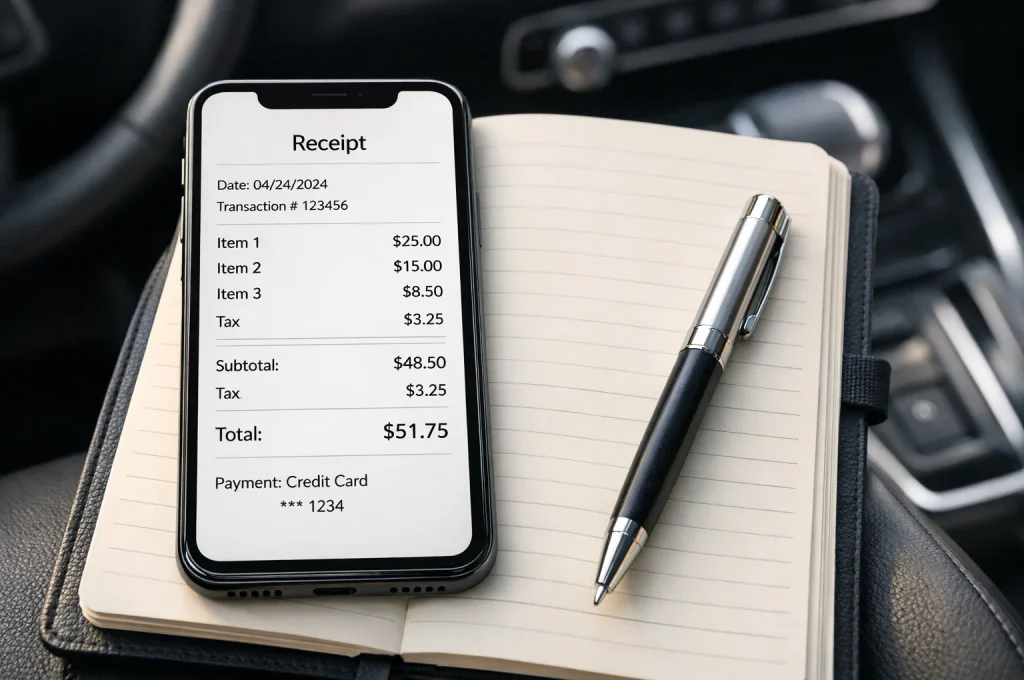
If it’s a business ride, label it once and make it easy later:
Date
Route
Reference (client or project code)
Point-to-point is best for one pickup → one drop
Hourly is best for multi-stop days, uncertain end times, or planned waiting
A smooth day includes agreement on:
what counts as “waiting”
how updates should be sent
when we shift to Plan B instead of circling the curb
Quiet cabin by default; conversation only if invited
Low-friction texts instead of calls
Privacy-first drop-offs with minimal curb time
Stop order + full addresses in one message
Declare the hard deadline stop (flight/meeting)
Add a recovery block every 2–3 stops
In Kirkland, hourly is best when you have multiple stops, uncertain meeting end times, or planned waiting. It keeps the day flexible without constantly reworking the booking.
Enough to absorb “small truth” delays (lobby, elevator, exit, curb). For tight loops, add a recovery block every 2–3 stops so one late meeting doesn’t break the day.
Entrance side, any security or access rules, whether there’s a loading loop, and your fallback meet point if stopping is restricted.
We build timing around peak windows and terminal variability, not just distance. The goal is predictable arrival at the airport, not a stressful last-minute sprint.