Bellevue Town Car
#1 Town Car Service in Eastside, WA


In Anacortes, the “hard part” isn’t the drive — it’s the timing layer you can’t negotiate: ferry windows, staging lanes, boarding cutoffs, and the moment a crowd pours out and everything turns into one long curb line.
When a sailing is loading (or just unloaded), the busiest curb becomes a trap: cars can’t stage, people stop “for one second,” and drivers get forced into slow loops.
Our meet-point pattern:
We choose a pickup spot that’s one step outside the main curb pressure zone — close enough to be easy, far enough to stay movable.
What that looks like in practice:
A clear, tall landmark you can see from 50+ feet away (pole/sign/map board)
A straight path from the terminal area (no weaving through idling cars)
A fast escape route (so we don’t get stuck behind the next wave)
If you’re standing in a place where everyone is honking and squeezing past each other, you’re already too close. We’ll pull you 30–90 seconds away from that bottleneck.
“We’re at the tall light pole by the outer pickup lane, near the big route board, facing the water. Group has BLUE jackets.”
If the terminal loop is blocked, cones appear, or traffic control forces a reroute, we switch to a two-tier fallback:
Plan A (default): the calmer edge pickup spot outside the tightest curb loop.
Plan B (if access is restricted): a well-lit, easy-turnaround pickup point just outside the terminal pinch zone.
You’ll get one short text from us:
“Switching to Plan B”
landmark + facing direction
vehicle description
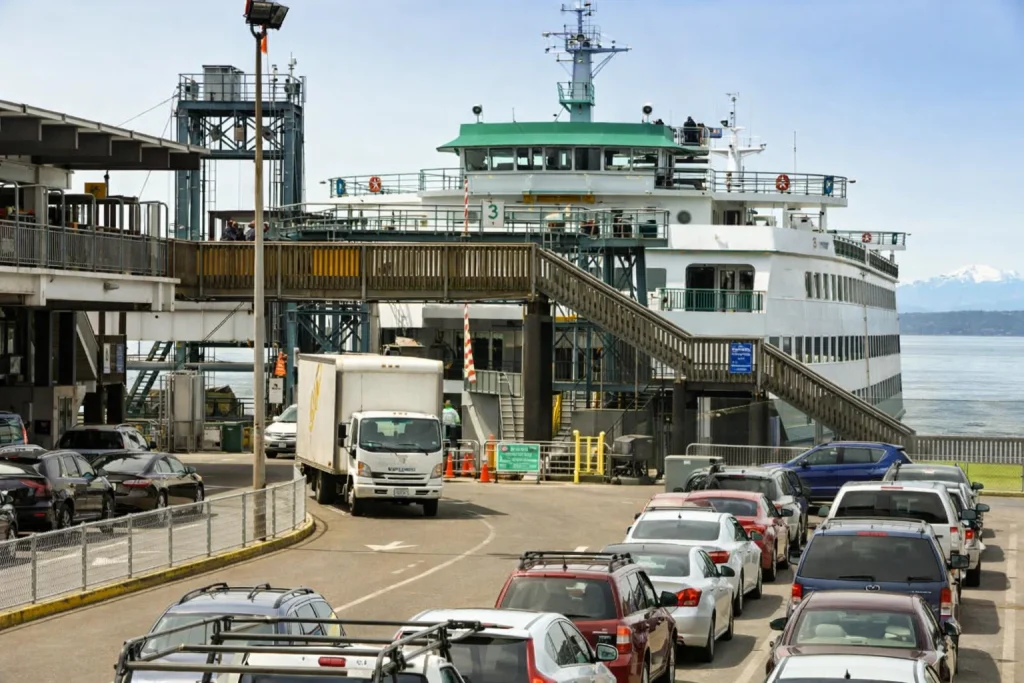
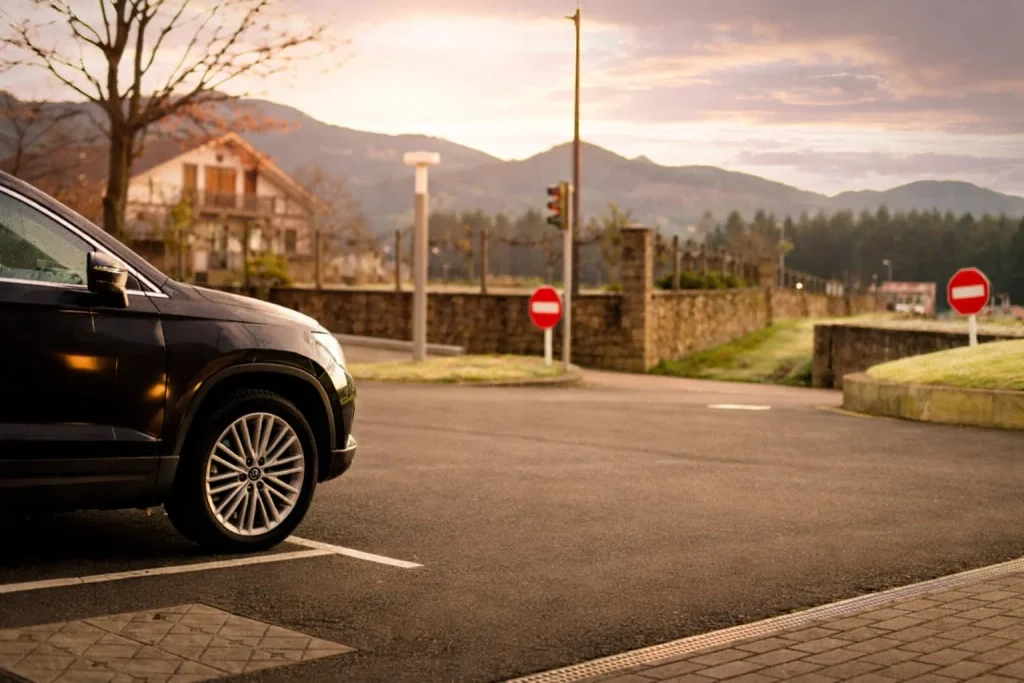
Ferry-terminal edge pickup that avoids the tight curb loop during boarding/unloading waves
Waterfront/hillside pickup where narrow curb lanes make quick staging difficult (we pick the “clean exit” side)
Marina/boat-day meetups where gear loading needs space and a straight pull-out
Ferry-terminal drop-offs and pickups (sailing-window planning)
Seattle–Tacoma International Airport runs that include ferry timing
Business days into the metro corridor (early starts, fixed meeting times)
Event nights with late returns (safe meet points + tight comms)
Sailing variability is real — seasonal schedules, changed times, and “it’s different today” moments happen, so your plan must be built around a window, not a single perfect minute.
Boarding/unloading comes in waves — even if you arrive “on time,” staging lanes and unloading surges can add minutes you can’t predict from a map.
Ferry-specific friction point + fix:
Friction: staging/holding lanes and boarding lines can trap vehicles, forcing loops and delaying pickups.
Fix: we stage outside the trap, confirm you’re walking, then do one clean pass to load and leave — no circling behind the same line twice.
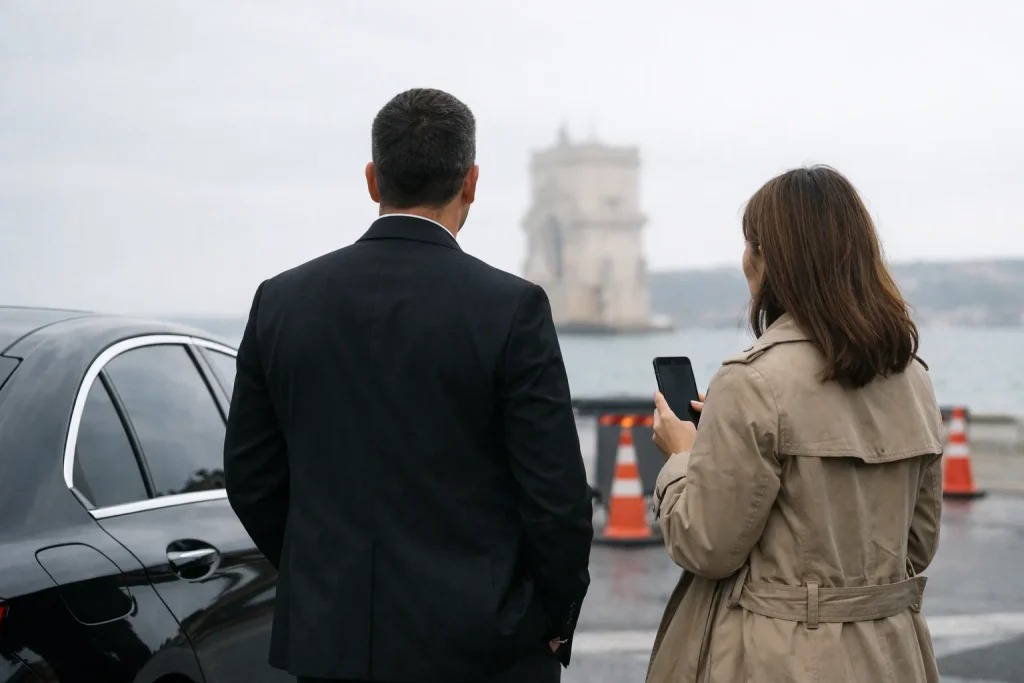
Don’t plan around “departure time.” Plan around last safe departure time the moment you must leave your pickup location so you’re not gambling at the terminal.
Your last safe departure time should cover:
the approach into terminal congestion,
a slower staging lane,
a short pickup delay (because reality happens).
Your buffer isn’t “extra time.” It’s time you reserve for friction:
finding the right lane,
waiting behind a line that appears instantly,
loading quickly without blocking traffic.
If you’d be furious missing the boat, your buffer must be designed to prevent it — not to “hope it won’t happen.”
Before you even leave, pick one backup sailing that still works. Then the missed-boat scenario becomes a simple pivot, not a scramble.

Use this exact structure:
“We’re at [LANDMARK], near [SECOND ANCHOR], facing [DIRECTION/FEATURE].”
Add one line:
“Group has GREEN coats.”
One color. One decision. That’s what makes it fast.
Pick a “rejoin point” before anyone moves:
a map board,
a tall pole,
a numbered row,
a large sign.
If you split, the text stays simple: “Rejoin at the backup landmark.”

Airport days work best when you treat them like two trips stacked together:
the road portion,
the ferry/terminal portion.
We build the timeline backward from your must-arrive-by time and protect you from the “we were fine until the terminal” problem.
Text luggage like you mean it:
“4 passengers”
“3 large suitcases + 4 carry-ons”
“1 stroller + 1 cooler”
Surprise luggage is the #1 reason a smooth pickup becomes a slow one.
If you’re late, don’t aim for the busiest curb. Aim for the fastest load-and-go point.
A clean late pivot looks like:
“Go to the tall pole by the outer lane”
“Face the water”
“Blue jackets”
load
leave

Send this as a single message:
Stop 1 — address
Stop 2 — address
Stop 3 — address
Return — address
No screenshots. No separate texts. One block is fastest.
Peninsula-style days drift because each stop steals a little time. Build recovery on purpose:
add a cushion after Stop 2 or 3,
assume one delay (parking/photos/slow exits),
keep staging predictable.
If your stops are flexible, hourly prevents rebooking chaos.
If your stops are fixed (appointments), point-to-point keeps it tight.
Choose based on drift risk — not optimism.
Pick a target sailing and build buffers backward.
Missed-boat plan: next sailing + meetup pivot (decided before you move).
Text checkpoints: “arrived” → “boarding” → “departed”.
Choose a well-lit meet point for late returns.
Add a backup contact for low-signal zones.
Define a fallback pickup point if terminal access is blocked.
The fastest spot is usually not the main curb. It’s the location one step outside the tight loop where the driver can stage, load, and exit without getting trapped behind boarding lines.
Choose the vehicle that lets you load without stacking bags to the ceiling. If you have strollers/coolers/extra gear, you’ll want more cargo space than you think so loading stays quick and curb time stays short.
Set a last safe departure time (not just a sailing time), add a buffer for staging lanes/lines, and keep one backup sailing in mind. Your plan should protect you from the terminal layer, not pretend it doesn’t exist.
Yes. We plan airport runs around a sailing window, terminal congestion risk, and a missed-boat pivot so the trip doesn’t collapse if the terminal is busy.