Bellevue Town Car
#1 Town Car Service in Eastside, WA


Tacoma is a busy city, between corridor traffic, hill-to-flat transitions, and curb zones that can flip from “fine” to “blocked” in a minute, the difference between an easy ride and a messy one usually comes down to one thing: how you plan the transportation. Whether you’re in the Stadium District, North End, Proctor, South Tacoma, or the Hilltop neighborhood, Bellevue Town Car brings luxury black car service right to your door. We know Tacoma’s streets, we know the traffic patterns on I-5 and SR-16, and we know how to get you where you’re going — on time, every time.
Multi-stop days drift when tiny frictions stack up: a slow load-in, a curb that’s suddenly coned off, one wrong turn to “just grab the front,” and a hallway conversation that runs long.
Use the side-street + straight exit pattern:
Meet one short block off the busiest curb (not at the main flow).
Choose a spot where the driver can pull in, load, and leave forward—no loops, no awkward reversals.
If the area has heavy foot traffic, pick a point after a signal (so the car isn’t trapped behind unloaders mid-block).
Use a three-step fallback:
Plan B (same block): shift to the next driveway/curb break after the light.
Plan C (parallel street): move one block over to a calmer curb (less foot traffic, easier pull-in).
Rule that saves the day: if cones or control appear, we shift the meet point—no circling.
Circling feels active, but it’s usually the slowest option. A quick reset beats five loops.
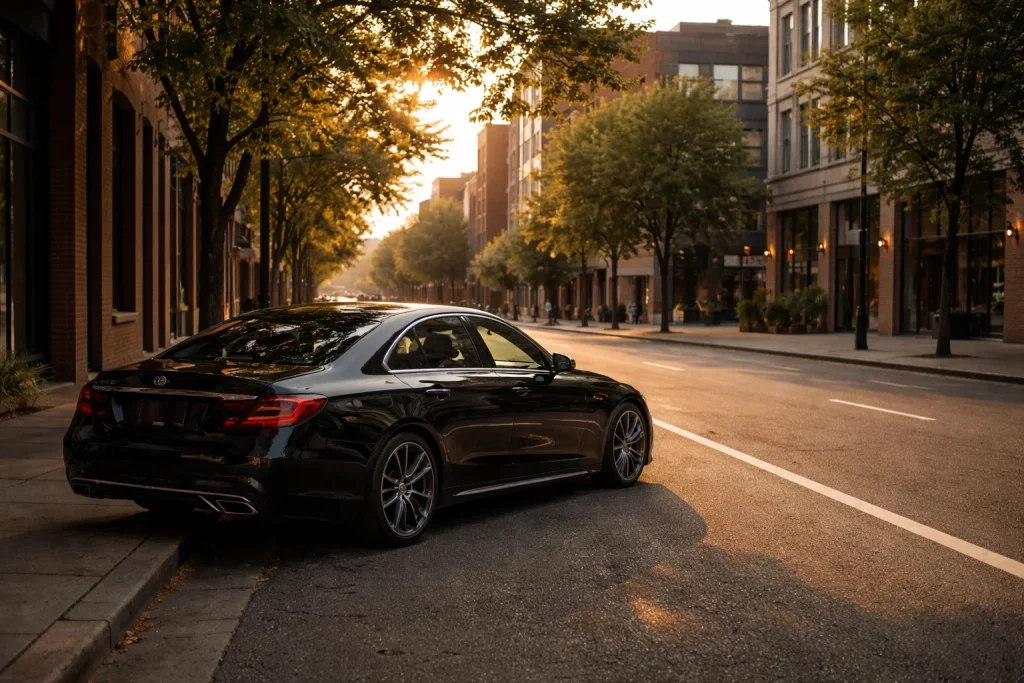
Downtown grid side-street pickup: one block off the busiest curb, quick walk-out.
Hill-to-flat cross-street meet: pick the flatter side street so loading is safer and faster.
Port/industrial edge pickup: choose a wide curb with a clear pull-out (avoid tight stops where trucks queue).
Airport transfers to Seattle–Tacoma International Airport (SEA)
Seattle business days (meetings, site visits, multi-stop schedules)
Eastside runs (appointments, corporate offices, dinner reservations)
Event-night pickups (post-show / post-game crowd release)
Medical runs (early check-ins, discharge pickups, consistent timing)
Ferry connections (when your day involves a crossing and timing is non-negotiable)
Mountain/day-trip corridors (weather-aware schedules toward Mount Rainier and nearby day routes)
Private group nights out (one vehicle, one meet point, no party split)
The drive from Tacoma to Seattle-Tacoma International Airport (SEA) can take anywhere from 25 minutes to over an hour depending on I-5 congestion. Our professional chauffeurs monitor real-time traffic and your flight status, leaving nothing to chance. Skip the Tacoma Link Light Rail hassle or costly airport parking — let us handle the pickup and drop-off door-to-door, whether you’re flying out of the main terminal or using the South Satellite.
Tacoma is home to major employers including MultiCare Health System, JBLM (Joint Base Lewis-McChord), the Port of Tacoma, and a growing tech and professional services sector. Our black car service is the preferred choice for executives, consultants, and government contractors who need reliable, discreet transportation to meetings, conferences at the Greater Tacoma Convention Center, or connections to Seattle-area offices.
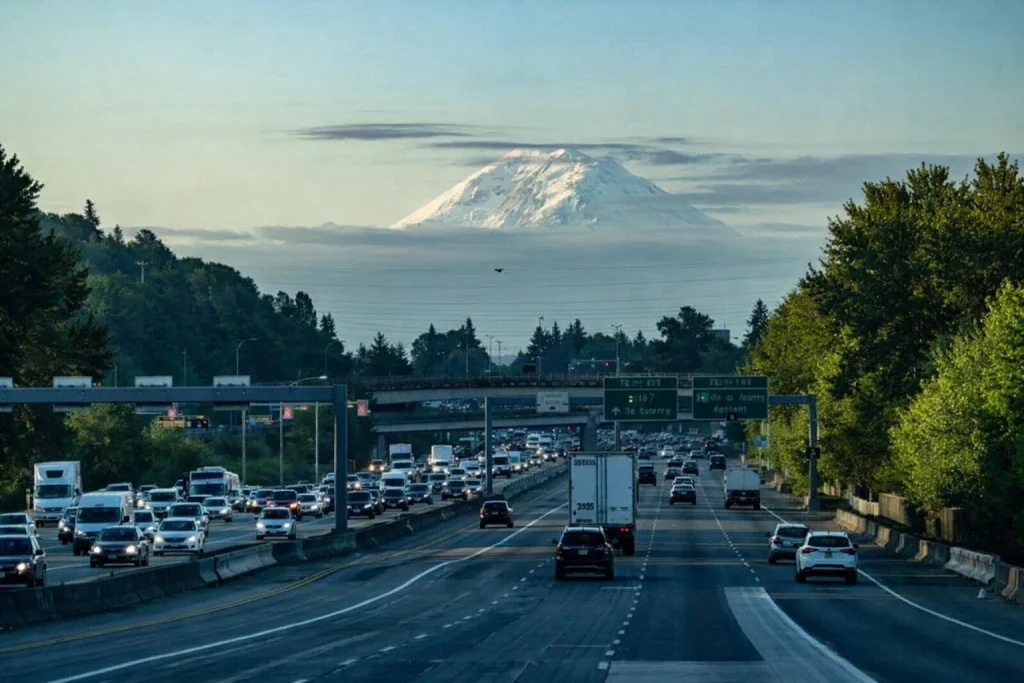
If you’re moving near an event zone or construction corridor, add a buffer that covers:
A lot of delays aren’t driving delays—they’re pickup delays.
One sentence that prevents chaos:
“If the corridor locks up, we protect the hard deadline and shift the meet point—optional stops move or drop.”
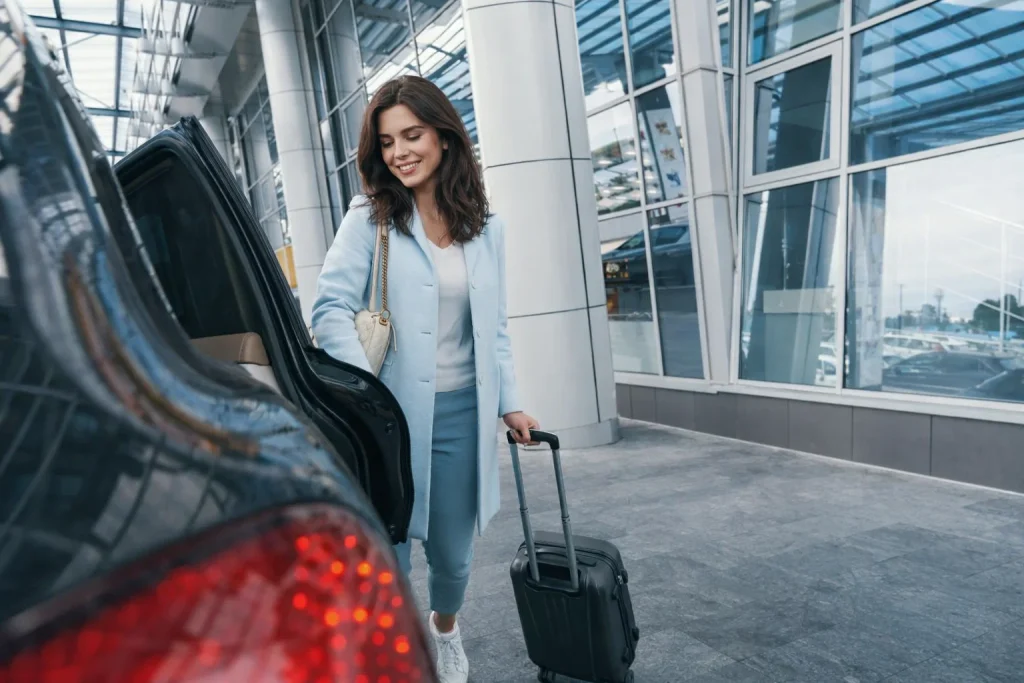
Airport runs succeed when you plan for two things at once:
If either one surprises you, the whole plan feels rushed.
For departures: protect check-in, security, and the last stretch into the terminal area.
For arrivals: protect the meeting moment—because that’s where most airport pickups go sideways.
A clean arrival pickup looks like this:
If the pickup curb is jammed or controlled, circling creates missed connections. The faster move is:
shift one block/one zone to a calmer curb,
and keep the meet point simple.
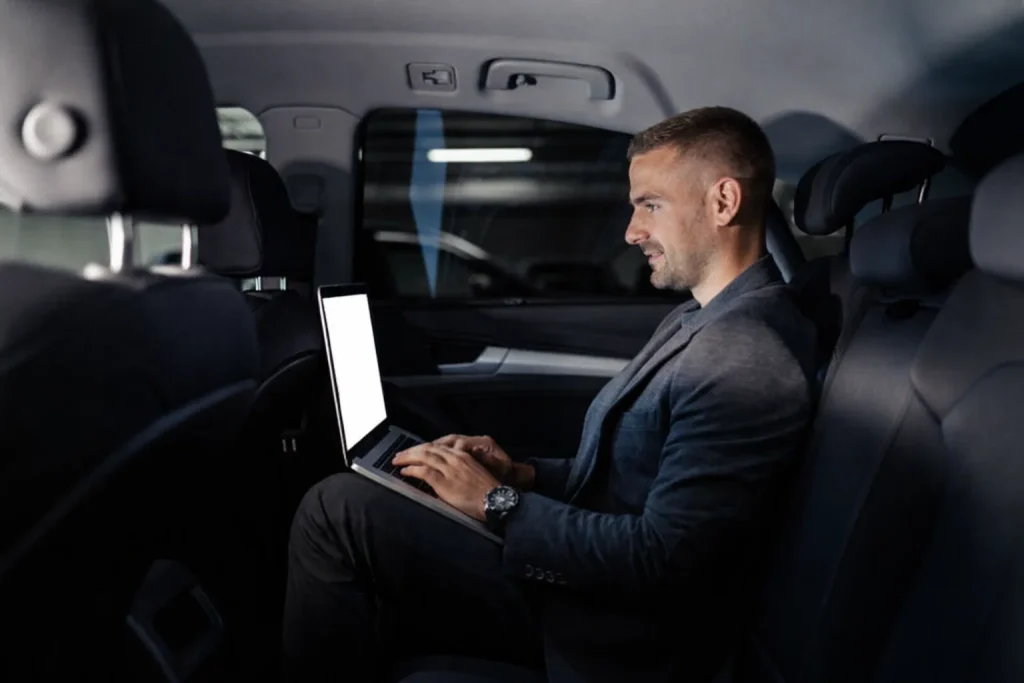
If your day has stops, you need recovery blocks—small cushions that stop drift from snowballing:
5 minutes to load out,
5–10 minutes for surprise traffic,
5 minutes for clean positioning at the next pickup.
Without these, your last stop always pays for your first stop.
Before wheels move, confirm:
the hard deadline stop, and
the one stop that can flex.
Use this decision rule:
1–2 stops with firm times: point-to-point is usually fine.
3+ stops, uncertain dwell time, “we might add one”: hourly keeps the day stable and prevents re-quoting stress.
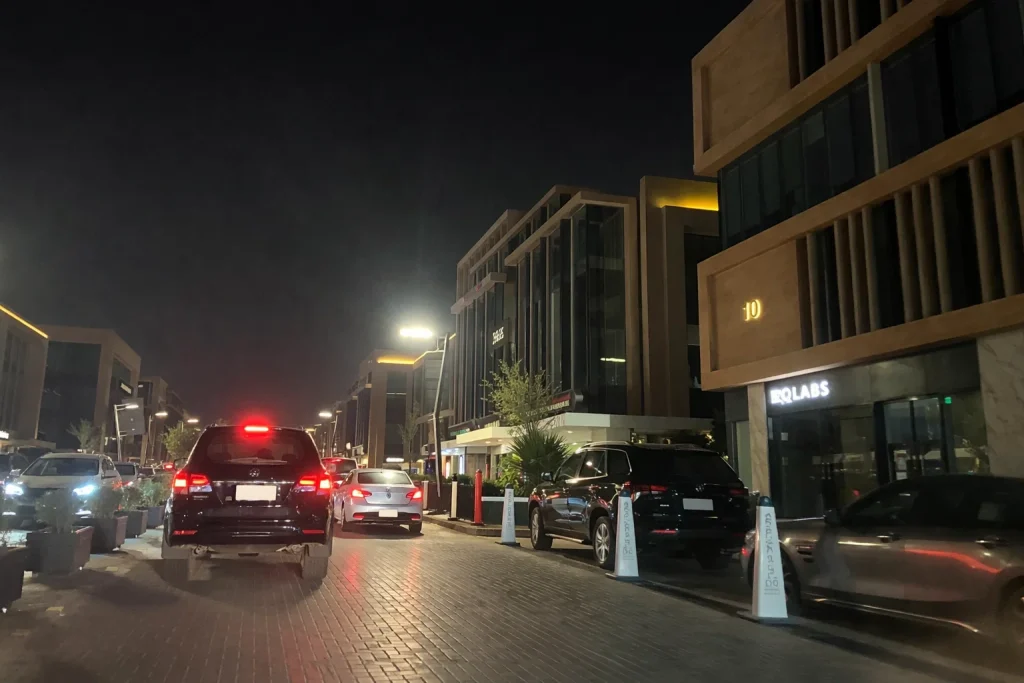
Plan:
choose a meet point outside the thickest crowd zone,
walk 60–120 seconds together,
and let the car arrive clean instead of trapped.
Late-night priorities are different:
lighting,
clear sight lines,
minimal street-crossing,
predictable pull-out.
If a spot feels sketchy or chaotic, it’s the wrong meet point—even if it’s “closer.”
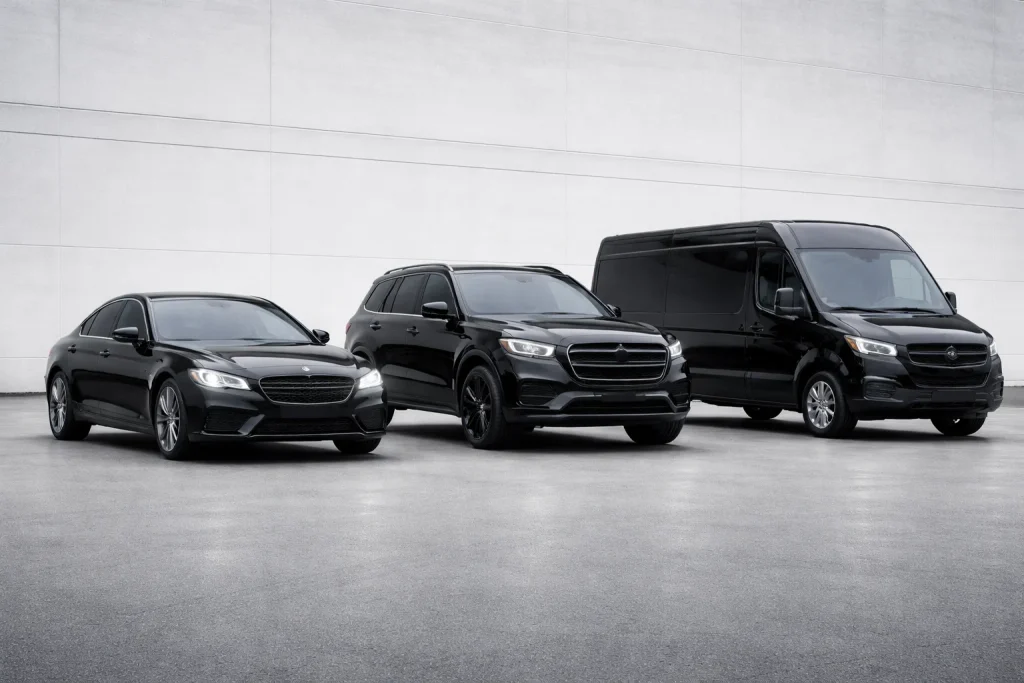
Sedan: best for solo/dual riders, quick curbs, light luggage.
SUV: best for comfort, luggage, and “we don’t want to feel squeezed” rides—especially for longer corridors.
If the group is large, splitting creates two problems:
two meet points,
and two clocks.
One vehicle keeps the group together and the plan predictable.
If you’re taking calls or you just want quiet: request quiet cabin in advance, and confirm who’s the main contact,
Walk out 60–120 seconds to a calmer side street and meet where the car can stop and leave forward. The “closest curb” is usually the slowest curb.
When you have 3+ stops, uncertain dwell times, or any “we might add one.” Hourly prevents drift and keeps the day from turning into a re-quote problem.
Meet point + passenger/luggage count + one identifier (clothing or suitcase color) + hard deadline. If it’s a group, add a second contact.
We pivot: protect the hard deadline first, then re-order flexible stops. The key is deciding what can move before traffic forces the decision.