Bellevue Town Car
#1 Town Car Service in Eastside, WA


Marysville days move fast—school-run traffic waves, I-5 slowdowns that appear out of nowhere, and pickups where “I’m outside” somehow means three different places. Our Marysville black car service is built to remove that friction: one clear meet point, one clean confirmation, and a ride that stays calm even when the schedule doesn’t.
Long-distance pickups (airport runs, client sites, ferry connections, late-night returns) go sideways when the plan is vague. The fix is a quick confirmation routine that locks the pickup into something specific, visible, and repeatable so nobody circles, wanders, or guesses.
In Marysville, the smoothest meetups usually happen one turn away from the busiest curb, where the car can pause legally and safely:
Choose a predictable pull-off (wide driveway loop, lot edge, or safe pull-in) that’s easy to spot.
The driver arrives and stages, not blocks—no pressure, no horn symphony.
The rider only walks out when they’re actually ready, so the pickup becomes one clean stop instead of a slow-motion search.
Think “easy approach + obvious landmark + room to load bags,” not “tight curb + everyone competing for the same 30 feet.”
One-text meetup script for a group-
“Group meetup: by the [tall sign / main canopy / flagpole]. Stand on the [right/left] side facing [north/south]. Our lead is wearing a [bright color] jacket. Please stay together until the car pulls up.”
If the pickup point becomes unusable, we switch fast—without confusion:
Freeze movement: “Don’t cross lanes or chase the car.”
Shift to Plan B: move to a nearby well-lit, low-traffic pull-in (lot edge / driveway loop / covered entrance).
Confirm by text: “Plan B: at [landmark], wearing [color], with [# of people].”
Driver approaches from the simplest direction (we’ll message which side to use).
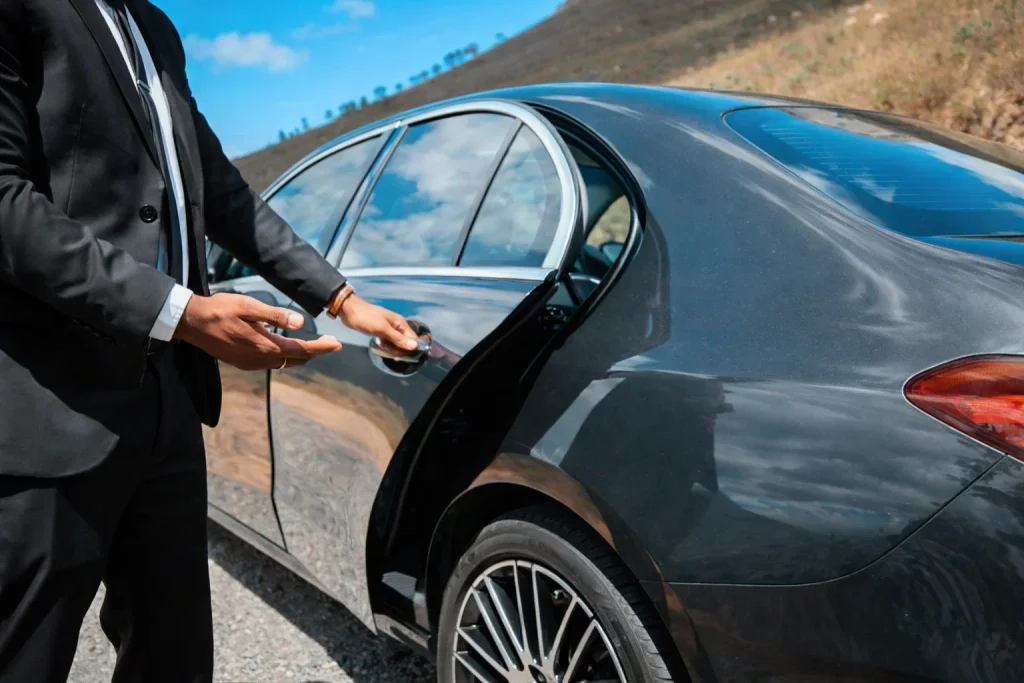
Lot-edge pull-ins near major corridors (easy staging, clear approach)
Driveway loop meetups (quick load, minimal curb conflict)
One-block-off residential meet points (quiet corner pickup instead of tight curbs)
Park-and-ride style meetups (space, visibility, fewer last-second surprises)
Airport transfers (early departures, late arrivals, luggage-heavy trips)
Corporate rides to Bellevue/Eastside client sites
Everett-area business stops and multi-address pickup days
Ferry connections (sailing windows + loading variability)
Morning + late-afternoon squeeze: traffic “peaks” aren’t a myth—build buffers so you’re not watching the clock at every merge.
Winter reality: early darkness + low visibility (and occasional slick roads) means meet points should be well-lit and unmistakable, not “somewhere near the curb.”
Morning + late-afternoon squeeze: traffic “peaks” aren’t a myth—build buffers so you’re not watching the clock at every merge.
Winter reality: early darkness + low visibility (and occasional slick roads) means meet points should be well-lit and unmistakable, not “somewhere near the curb.”
Text these and the ride stays clean:
Exact address + best entrance/side (or gate code if needed)
Passenger name + best callback number
Riders + luggage count (and any bulky gear)
The hard time (flight, meeting, reservation)
Landmark + clothing color for fast visual confirmation

Confirm bags, addresses, and timing the night before.
Do this once and you’ll sleep better:
Confirm pickup address (include unit/building notes if relevant)
Confirm luggage count and any special items
Confirm the “ready time” vs. the “must-arrive time”
If you’re coordinating others, name one point person—one voice keeps it smooth.
Add peak-time buffers, then stop thinking about traffic.
The best luxury is not leather—it’s not stressing:
Add a buffer that protects your hard time (check-in, boarding, meeting start).
Once the buffer is in place, stop negotiating minutes in your head. We’ll handle the drive.
Keep a backup route note if a main corridor slows.
A single line helps more than a long discussion:
“If the main corridor bogs down, prioritize the route that protects arrival time.”
Or:
“Prefer the smoother ride over the fastest-at-all-costs route.”
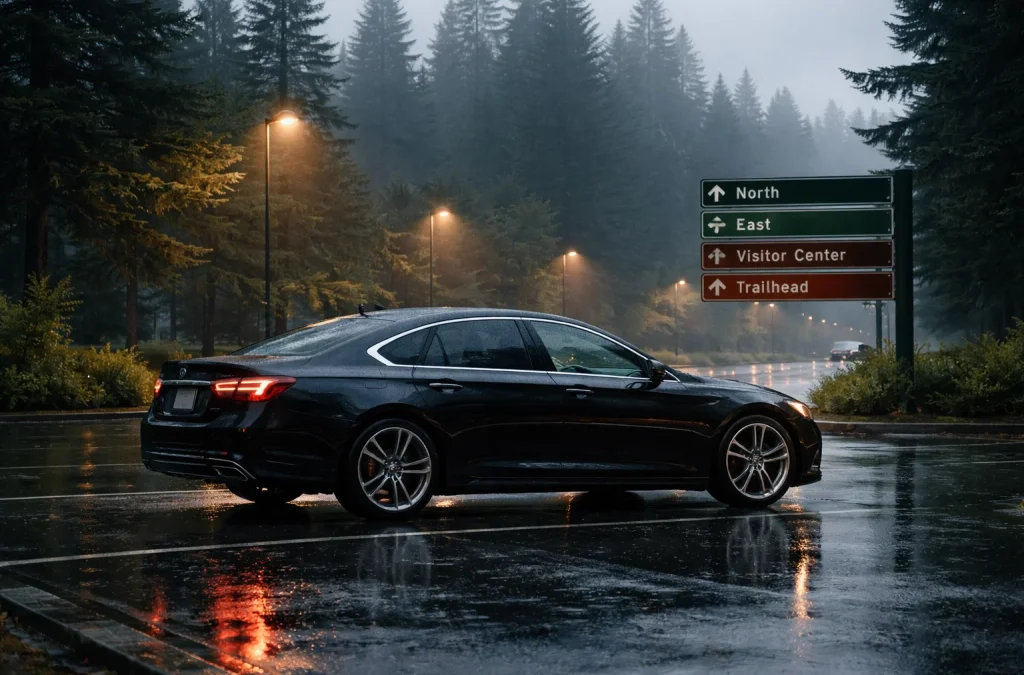
Favor predictable pull-offs over crowded curbs.
A good meet point has:
a clean approach (no sudden U-turns)
room to load bags
a landmark you can describe in one sentence
If it takes two paragraphs to explain, it’s not the right meet point.
Keep a one-text meetup script ready.
Use the same script every time. Consistency is what keeps groups together—especially when people are tired, late, or juggling luggage.
Choose a fallback meet point for closures or events.
Always pick a Plan B that is:
1–2 minutes away
well-lit and easy to spot
not dependent on a single curb lane being open
That’s how you avoid “we’re right here” phone-tag.
Stop order + addresses in one message
Send it like this:
Stops (in order):
[Address] – [Name]
[Address] – [Name]
[Address] – [Name]
Notes: luggage / gate code / who’s coming out
One message. One source of truth.
Declare the “hard time” stop (flight, meeting, reservation).
Tell us which stop cannot move:
“Stop #3 must happen by 2:10 PM—everything else flexes.”
Now we can protect the schedule intelligently.
Add 10 minutes recovery every 2–3 stops.
Multi-stop days drift when there’s no recovery:
Add 10 minutes every 2–3 stops for loading, quick delays, and real life.
It’s the difference between “barely” and “smooth.”
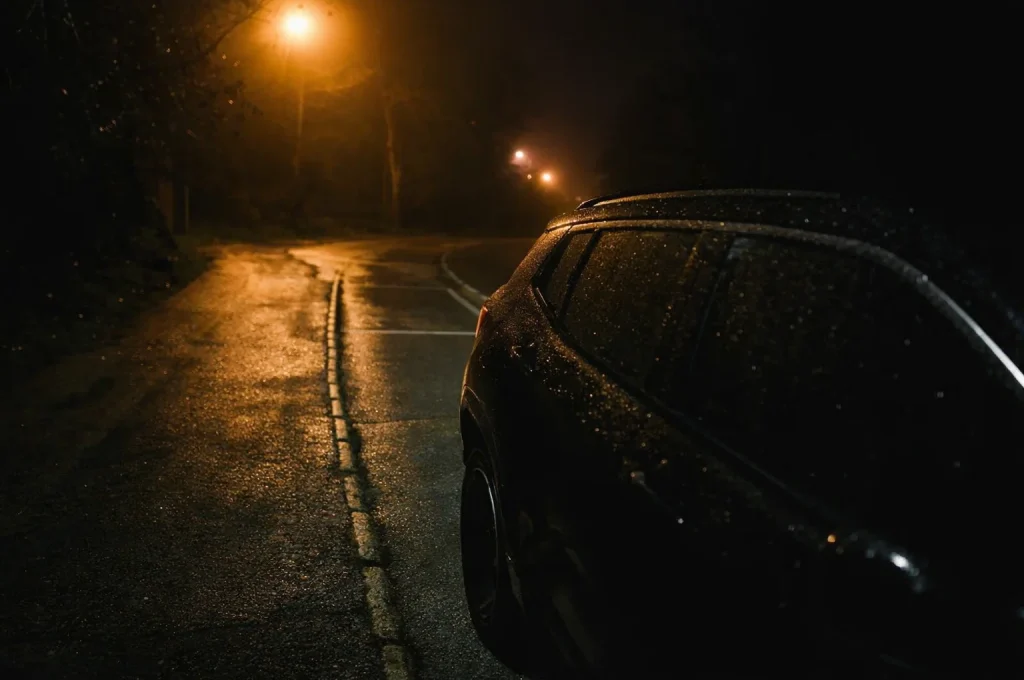
Well-lit meet point, minimal wandering.
Late-night pickups should be obvious:
bright lighting
clear landmark
minimal crossing or wandering
If it feels sketchy or chaotic, we move the meet point a minute away to something safer and simpler.
ETA updates at 10 and 3 minutes out.
We keep it simple:
10 minutes out: get everyone ready
3 minutes out: step to the meet point
No guessing. No missed car.
Backup contact if a phone dies.
For groups, include:
a backup phone number
one point person
clothing color + landmark
That way the pickup still works if someone’s battery quits at the worst time.
Pick a meet point one turn away from the busiest curb—lot edge or loop driveway—with a landmark you can describe in a single sentence. Then use one group text script so everyone stands in the same place.
We follow your priority: protect the ETA for a hard deadline, or prioritize the smoother route if comfort matters more. If you text a one-line preference (“arrival certainty over anything”), decisions become instant.
Hourly is the better choice when you have 2+ stops that may change, you expect waiting (meetings, photos, dinner timing), or you’re coordinating multiple passengers. It prevents re-booking stress mid-day.
Text: exact address + best entrance/side, passenger name + phone, number of riders + luggage, the hard time (flight/meeting), and a landmark + clothing color.