Bellevue Town Car
#1 Town Car Service in Eastside, WA


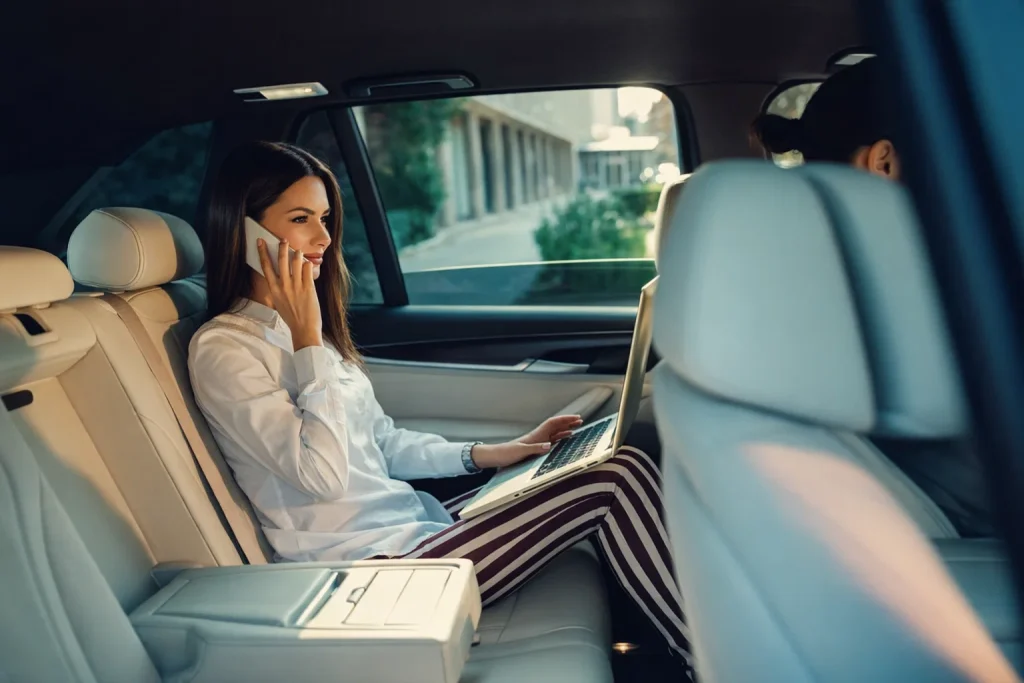
When your day is stacked with meetings, campus-style stops, and airport timing, the “ride” is really the control layer. Our Bothell black car service is built for clean handoffs, quiet productivity, and predictable pickups—so you can take calls between stops, arrive composed, and keep your schedule intact.
We serve Bothell and the surrounding Eastside/Northside corridor with premium sedans and SUVs, professional chauffeurs, and a communication style designed for busy teams: short texts, clear meet points, and flight-aware airport transfers.
Bothell is one of those places where your route can switch from calm to congested fast especially when you’re moving between office parks, arterial connectors, and quick freeway hops. That’s why we run a quiet-cabin protocol by default: minimal chatter, no surprise phone calls, and smooth, steady driving so you can actually use the time.
Instead of aiming for the most obvious front-door curb (usually the one with the most drop-offs), we use a “one-step-off” meet point:
Pick a visible landmark (signage, main walkway, lobby-facing corner) that’s one turn away from the primary curb flow.
Choose the side with fewer conflicts (typically not where rideshare lines form).
Confirm the “approach direction” so the vehicle arrives facing the easiest exit—no awkward U-turns, no looping twice.
This pattern cuts noise, reduces curb friction, and keeps your call uninterrupted.
One-text meetup script for a group-
“Group meetup: by the [tall sign / main canopy / flagpole]. Stand on the [right/left] side facing [north/south]. Our lead is wearing a [bright color] jacket. Please stay together until the car pulls up.”
If the intended access point is blocked, we don’t “restart the ride”—we shift the meet point:
Default fallback: nearest safe pull-in/turnout within 30–60 seconds of the original entrance.
Second fallback: a cross-street corner with clear visibility and a safe shoulder (no standing in drive lanes).
Weather fallback: covered entry edge (awning/overhang) with a short walk—driver confirms exact side and approach.
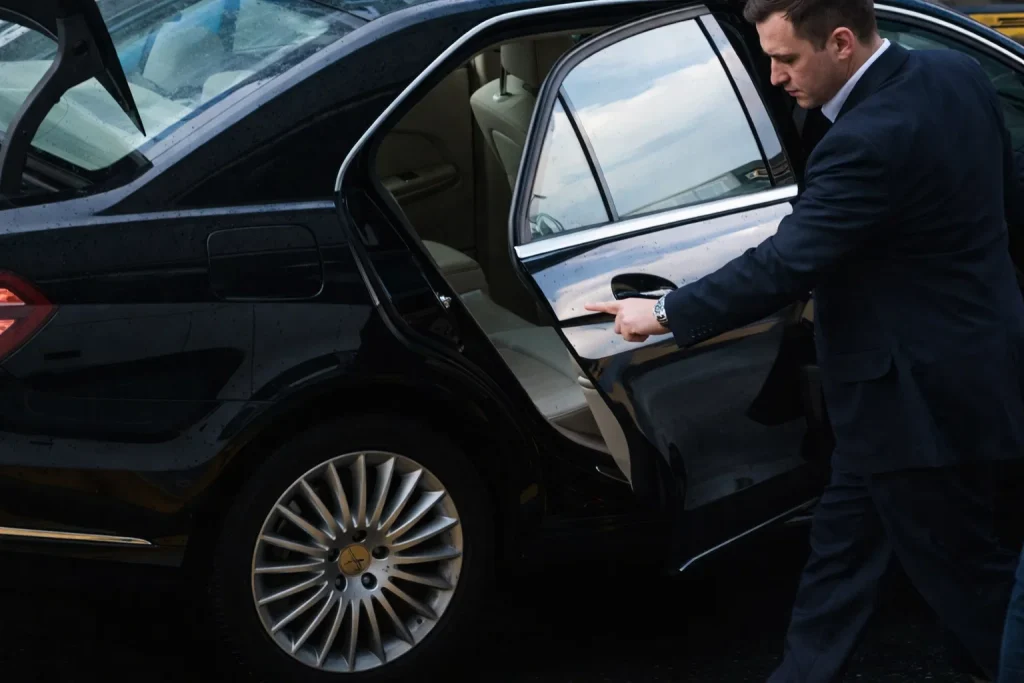
Before the first pickup, we confirm:
the exact door or entrance name
the preferred side (left/right) for curb approach
the passenger name your chauffeur should ask for
That prevents the classic “same building, wrong entrance” drift.
We plan around peak windows, not just mileage. If your itinerary crosses main connectors during commute times, we add buffers between stops so a single delay doesn’t domino into your entire afternoon.
For team days: choose one coordinator. One sender means:
fewer conflicting instructions
fewer last-minute changes
faster confirmations
We’ll still be courteous to the full group, but the ride stays clean when updates come from one thread.
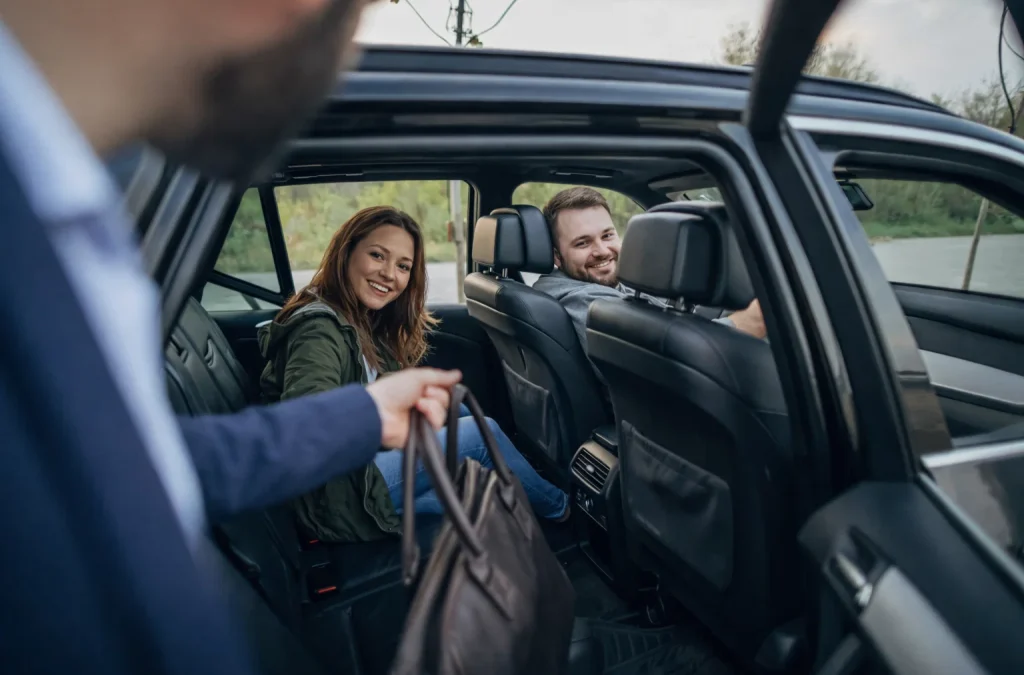
Bothell has a mix of office clusters and campus-style layouts where the “front door” might not be the easiest pickup.
We prefer predictable points that don’t trigger security congestion:
an outer edge near a main walkway
a designated visitor pull-in (if available)
a curb segment where vehicles can stop briefly without blocking flow
Best format:
Building side + one landmark + direction facing
Example: “West side, near the main sign, facing the road.”
Loops can be efficient—until everyone calls everyone. Decide:
does the chauffeur text first when entering the loop?
or does the coordinator text “ready now” when the group steps out?
Pick one. It removes the loop-lap problem.
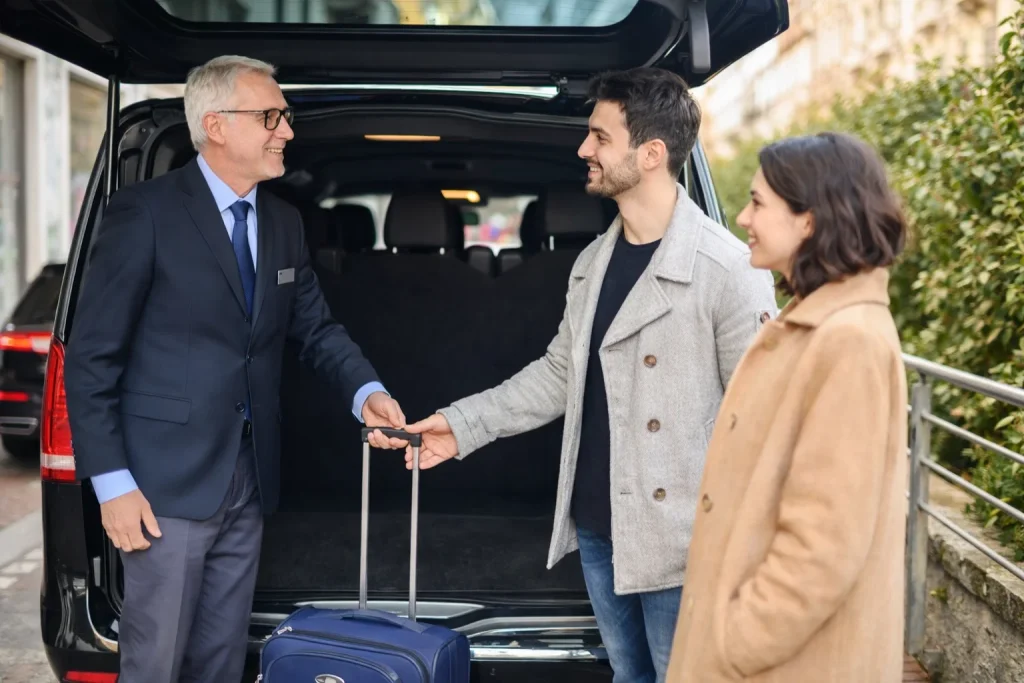
Airport runs are where structure pays off: your timing becomes predictable when your plan is consistent.
Bothell-to-airport timing depends heavily on when you leave. We set departure windows to avoid being trapped by predictable peak pressure and help you arrive with a calm buffer.
We track your flight and confirm a crisp meeting plan so you’re not wandering with luggage:
who we’re meeting
what you’re wearing / identifying
the exact script you’ll send if the pickup point needs to shift
If the terminal area is crowded, the fix is usually meet-point adjustment, not “try again later.” We’ll move you to a clearer spot and keep the car positioned for a smooth exit.
We recommend using a reference label like:
“BOTHELL-MEETINGS-02” or “BOTHELL-AIRPORT-AM”
So receipts match your calendar without extra explaining.
Point-to-point is best for 1–2 stops with clear timing.
Hourly often wins when you have multiple stops, uncertain meeting end times, or a day that might stretch.
For clean billing, decide in advance:
how long “included wait” is
what counts as a “new hour”
whether the chauffeur should remain staged or circle

We keep it discreet:
quiet by default
minimal notifications
smooth acceleration/braking
So calls sound professional and your laptop time stays usable.
Sedan: best for solo travelers, quick stops, clean curb time
SUV: best for teams, luggage, comfort, and a calmer ride feel
Send:
passenger count
luggage count (especially carry-ons + larger bags)
any special items (presentation cases, equipment)
It prevents the last-minute “we need a bigger vehicle” scramble.
Late pickups should feel controlled, not improvised.
We’ll choose a well-lit point that’s easy to describe and doesn’t require walking around parking loops.
We provide clean, low-noise updates:
10 minutes out: confirmation + approach direction
3 minutes out: “pulling in now” + exact curb side
Every end-of-day pickup gets a fallback:
same landmark family
short walk
clear approach direction
Text the updated stop order (or the changed stop) and the “hard deadline” item. We’ll adjust routing and buffers, then confirm the revised plan in one message so you’re not juggling multiple threads.
Use a single sender and one meetup script. Pick a landmark, include direction facing, and identify one person by clothing color so the group doesn’t spread out.
Send the entrance name, best approach direction, and whether the location has a loop/pull-in. If there’s a security checkpoint vibe, choose a meet point one step away from the busiest curb.
Avoid the obvious front curb line. Choose a visible point that’s one turn away from peak drop-off flow and confirm the approach direction so the vehicle can exit cleanly.
We plan around commuter peaks rather than distance alone, add buffers between segments, and keep flight tracking on arrivals so timing changes don’t turn into chaos.